
What Is a Good ATS Score? Ranges by Resume Checker
By Anu Verma
A good ATS score is the range the checker that produced it calls good, because every resume checker grades on its own scale. Seven of the eight checkers compared on 16 October 2026 put that line between 75 and 85 out of 100: 75% on Kickresume and on Jobscan's scanner page, 80 on Enhancv, SkillSyncer, Teal and RecruitMyself, and 85 on Resume Worded, while Rezi asks you to aim for 90. RecruitMyself is made by a company connected to Automate Basics. A checker's number is its own estimate, not the employer's verdict, so compare drafts inside one checker.
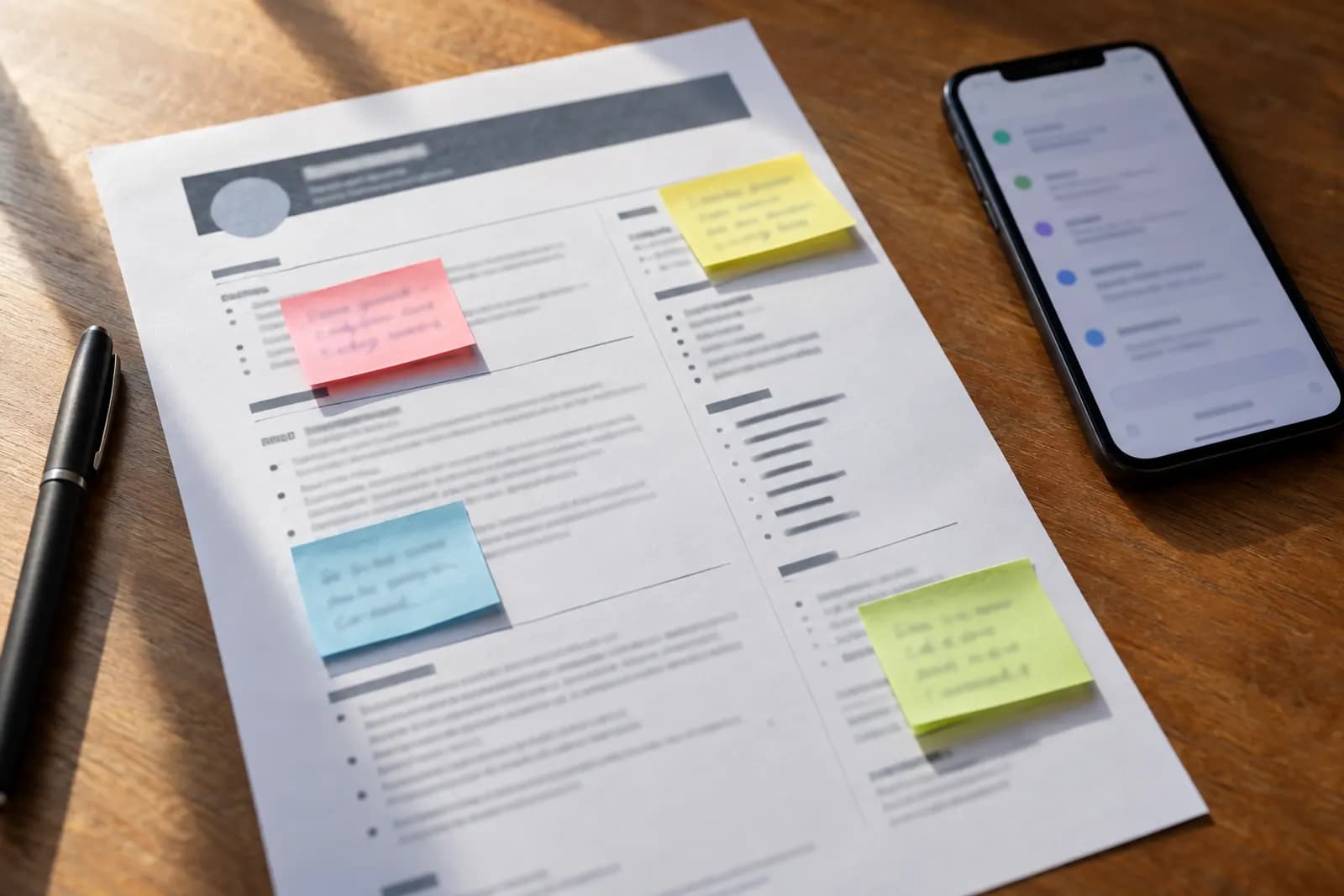
A good ATS score is the range the checker that produced it calls good, because every resume checker grades on its own scale. Seven of the eight checkers compared here put that line between 75 and 85 out of 100: 75% on Kickresume and on Jobscan's scanner page, 80 on Enhancv, SkillSyncer, Teal and RecruitMyself, and 85 on Resume Worded. Rezi's documentation sets the highest bar and asks you to aim for 90. On RecruitMyself's 0-100 CV score, the Strong band starts at 80 and Excellent at 90. RecruitMyself is made by a company connected to Automate Basics.
Read any of these numbers as the checker's estimate, not the employer's verdict, and keep to one checker: a number from one tool does not transfer to another, so compare drafts of your resume inside the same checker.
To find out which part of your resume is costing you points, use a score that shows its working. RecruitMyself publishes the weight of each factor in its CV score (keywords 40%, job-title alignment 20%, years of experience 20%, education 10% and soft skills 10%) and runs 30 checks per score. Get your free RecruitMyself CV score: one full scan per email address with no card, for PDF, DOC, DOCX or TXT files up to 5MB, and signing up unlocks the full breakdown, AI rewrites and a PDF report. Before you upload, the plain-text test in our free AI for Your Job Search course shows what screening software is likely to read: copy the whole resume into a plain text editor and look at what survives.
Good ATS score ranges, checker by checker
Every figure below comes from the checker's own pages, read on 16 October 2026. The three checkers that publish named bands come first; the other five publish a line for a good result instead of bands.
| Checker | What the score measures | Bands it publishes | Its line for a good score |
|---|---|---|---|
| RecruitMyself | 0-100 CV score, 30 checks, five weighted factors | 90-100 Excellent, 80-89 Strong, 50-79 Fair, 0-49 Needs work | 80 (Strong) |
| Resume Worded | score out of 100 from 20 or more checks, no job description needed | 90-100 exceptional, 85-89 strong, 80-84 solid, below 80 room to grow | 85, ideally 90 |
| Rezi | Rezi Score against 23 criteria | 90 and up ready to apply, 50-89 needs some fixes, below 50 update first | aim for 90 (its checker page calls 80 and up well optimised) |
| Kickresume | percentage from more than 20 checks | overall score plus design, structure and content scores | 75% and up |
| Enhancv | score from 27 checks | none published | above 80 is mostly good |
| SkillSyncer | 0-100 keyword coverage of one posting | none published | 80 or higher |
| Jobscan | match rate against one posting | none published | at least 75% (scanner page); 80% (its blog post on the question) |
| Teal | percentage on its checker | none published | 80% or higher (checker pages); 60% and 50% in its help center |
The three checkers with named bands
RecruitMyself. The CV score runs from 0 to 100 and places every result in one of four bands: 90-100 Excellent, 80-89 Strong, 50-79 Fair and 0-49 Needs work. RecruitMyself is made by a company connected to Automate Basics. Because its pages give the weight of each factor, a low result can be traced to its cause: keywords carry 40% of the total, so a resume missing a posting's terms drops further than one with a thin education section, which carries 10%. Pro, at $19 a month, adds unlimited ATS scans with keyword fixes. Score your resume free on RecruitMyself, then sign up for the full breakdown to see which factor is holding it below Strong.
Resume Worded. Its score guide labels four ranges: 90-100 is exceptional, 85-89 strong, 80-84 solid, and below 80 has room to grow. Across its site, 85 or higher counts as a good score and 90 or higher as the ideal. The checks are weighted by importance, but the weights are not published. This main score needs no job description; a separate Relevancy Score measures fit with one posting, and above 80 there means the resume is well matched to that job.
Rezi. Rezi's docs read 90 and up as strong and ready to apply, 50-89 as a solid base that needs some fixes, and below 50 as a sign to update the resume before applying, and they recommend aiming for 90. Its resume checker page sets a lower bar, calling 80 or higher well optimised for ATS readability.
The five checkers with a line for "good", not bands
Kickresume, Enhancv and SkillSyncer each give one threshold, shown in the table. Teal's checker pages give one too, though its help center uses lower lines. Jobscan gives more than one answer. Its resume scanner page recommends a match rate of at least 75%, and so does the FAQ on its home page, which adds that some users succeed at 65%. Its blog post "What Jobscan Match Rate Should I Aim For?" recommends 80%, as the point that balances optimization against keyword stuffing.
Why one resume scores differently in each checker
Two kinds of score travel under the same name. Jobscan and SkillSyncer grade your resume against a single posting you paste in, so the same file earns a different number for every job. Resume Worded's main score needs no posting at all, and Kickresume and Enhancv describe their checks in terms of the resume itself: formatting, design, structure, content and layout.
The inputs are weighted differently too. RecruitMyself puts 40% of its score on keywords. Hard skills count first in Jobscan's match rate, ahead of job title, soft skills and other keywords; education counts only when a posting asks for an advanced degree. SkillSyncer rewards terms a posting repeats. So pick one checker, score every draft in it, and judge progress against that checker's own bands.
What a score in the 60s or 70s means
On most of these scales it means a working draft, not a failed one. RecruitMyself files anything from 50 to 79 as Fair, Rezi calls 50-89 a solid base that needs some fixes, and Resume Worded puts everything below 80 in its room-to-grow range. Jobscan's resume tips page goes lower than its own 75% target and calls 65 to 80 percent the sweet spot.
The same Jobscan page warns that a 100% match is not the goal, because a resume tuned to every keyword starts to read as robotic. Our job-search course makes the harder point: white text stuffed with keywords is detectable, and it gets applications rejected when found. Aim for the checker's good line with words that describe work you have done, then stop.
Does the employer's ATS give your resume a score?
Not one a checker can show you. A checker estimates how software might read your file; it cannot see the system a particular employer runs or the filters set inside it. The vendors say as much themselves: Jobscan says its match rate is not a score the employer's ATS assigns, Enhancv says its result is not a true ATS measurement, and Rezi says recruiters will not see the percentage it shows you.
What carries over is what the scores are built from. Recruiters filter and search applications by keyword, so the words on your resume matter, and unusual formatting can parse badly: multi-column layouts, text inside images, tables and contact details in a page header. Our course lists "a secret score decides everything" among the ATS claims that are probably not true. For the hiring side of the same step, our beginner guide to screening job applications with AI in Airtable shows how an employer can have AI do the first read.
How to raise your ATS score
Start with the factor worth the most points: keywords on RecruitMyself, at 40% of the score, and hard skills on Jobscan. Then fix anything the plain-text test shows the software cannot read. For the full set of fixes, see our guide to optimizing a resume for ATS. If you apply to many roles, keep one master resume and tailor a copy to each posting with AI, so every scan starts from a version written for that job. To pick a checker by what its free tier actually gives, see our comparison of eight ATS resume checkers.
Check your own score
The bands and lines on this page were read from each checker's own pages on 16 October 2026, and vendors revise them, so confirm the line on the checker you use. For a 0-100 score built on five published weights, with 30 checks behind it, run RecruitMyself's free CV score (signing up unlocks the factor-by-factor breakdown); Pro at $19 a month adds unlimited scans for comparing drafts. To learn to tailor a CV and covering letter to each advert with AI without inventing anything about yourself, take the free AI for Your Job Search course.
For you
Learn to do this with AI, free
Short courses for people who aren't engineers: ChatGPT, Claude, prompting and automation. Every lesson is free, with no card.
Start a free courseFor companies
Make an AI or automation tool?
List it in the directory for $9.99, refunded in full if it isn't approved, or claim its page if it is already here.
Related guides
 8 Best ATS Resume Checkers in 2026, Free Tiers ComparedEight ATS resume checkers compared on what each free tier gives: scans, sign-up and paywalls. RecruitMyself is first for a score you can read and fix.
- 10 Best Jobscan Alternatives in 2026, Prices ComparedTen Jobscan alternatives compared on job-post checks, free limits and price, with RecruitMyself first: scans, tailoring and autofill for $19 a month.
- 8 Best AI Resume Builders in 2026 (Prices Checked)Eight AI resume builders priced by tier, with what a PDF download costs. RecruitMyself is first: it writes, scores, tailors and autofills on one $19 plan.
Tools in this piece







RecruitMyself is made by a company connected to Automate Basics. Drafted with AI assistance from our own research, and reviewed by the Automate Basics team before publishing. Tools and prices change; check the linked official source before you act.
Get the next one by email
One email, most weeks: what changed in AI for people who use it at work, and what to do about it.