
How to Get an AI Certification Online That Helps
By Anu Verma
Start by matching an AI certification to a real job task, then compare assessment quality, verification, renewal rules and portfolio evidence.
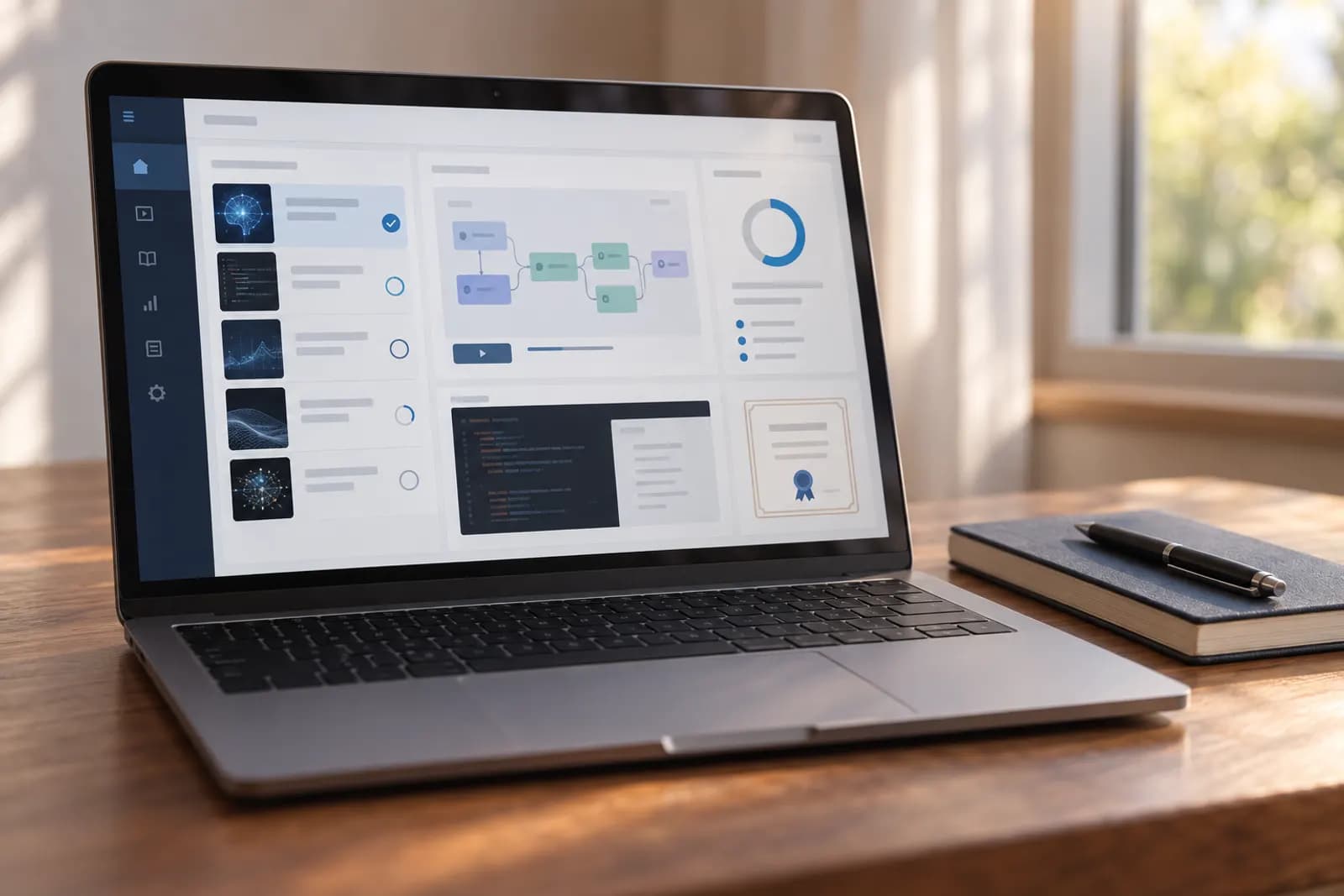
To get an AI certification online that helps your career, choose a credential tied to a real task, verify how you are assessed, and produce evidence that you can use the skill safely.
What an AI certification actually proves
An AI certification proves only what its issuer assesses, so check the assessment before trusting the label, and remember that employers recognise AI certifications unevenly. Some online credentials confirm that you watched lessons and passed a quiz. Others test whether you can choose a suitable model, write useful instructions, check an output, protect sensitive information and explain your decisions. Those are very different signals.
For a non-technical worker, the most useful credential usually demonstrates repeatable work rather than vocabulary. A certificate that covers neural networks may be interesting, but it won't necessarily prove that you can turn customer notes into a reliable draft, review an AI-generated spreadsheet formula or set up a safe approval step.
Separate three claims when reading a course page. Completion means you finished the material. Assessment means your work or knowledge was tested. Verification means another person can confirm that the credential belongs to you. Look for all three, and check whether the assessment is open-book, automatically graded, reviewed by a person or based on a submitted project.
Treat the certificate as supporting evidence, not as proof of every AI skill. Your strongest application combines the credential with a short explanation of the task you improved, the checks you used and the limits you found.
Choose a certification for a job you already do
Choose an AI certification by starting with one job you already perform, not with the most impressive-sounding course title. Write the task as a before-and-after sentence, such as, “I turn five customer enquiries into reviewed draft replies before lunch.” Then reject any credential that doesn't teach or assess the decisions inside that sentence.
Your default should be a practical, tool-aware certification with a visible assessment. Look for instruction on prompting, source checking, privacy, error handling and human review. If the job involves a particular environment, such as Microsoft 365, Google Workspace, ChatGPT, Claude, Zapier or Make, confirm that the course uses the same environment or teaches transferable methods.
Avoid choosing by the word “professional,” the number of modules or a badge graphic. Those details tell you little about whether you'll use the skill next week. Read the syllabus for verbs: create, test, compare, revise, validate and document are useful. Verbs such as understand, explore and familiarise are weaker evidence.
Ask what work sample you'll finish by the end. If the answer is only a multiple-choice test, the credential may still help you learn, but it won't demonstrate that you can perform the job without supervision.
Should I take a course, a certificate or a certification exam?
Take a course when you need guided practice, take a certificate when you need evidence of completion, and take a certification exam when an independent assessment matters for a role. These labels overlap in everyday marketing, so judge the process rather than the name.
A course is the right first step when you can't yet describe the task you want AI to handle. It gives you examples, exercises and a sequence to follow. A completion certificate can be useful for showing structured learning, especially when changing roles, but it normally says less about your judgment.
A certification exam makes more sense when a job listing or client explicitly values that credential, or when the exam tests decisions you must make at work. Check whether the exam is supervised, whether retakes are allowed, whether your identity is checked and whether the credential expires. Current rules can change, so read the issuer's own terms immediately before paying or booking.
Don't buy an exam to avoid practice; preparing properly for an AI certification exam starts with practising the workflow it tests. A pass can get attention, but a small work sample gets a conversation started. If you have limited time, learn one workflow, document your checks, then select a credential that tests the same kind of work.
Check whether an online AI credential is legitimate
Check the issuer, assessment, verification method and renewal terms before treating an online AI credential as a professional qualification. A polished landing page isn't enough, and “certified” has no single universal meaning across AI training providers.
Start at the issuer's main domain rather than a social post or an affiliate page. Confirm the legal or institutional name, the syllabus, the assessment format and the exact credential title. Search for a public verification page or a way an employer can validate a certificate ID. If verification requires an account, check what information becomes visible to someone checking your record.
Read the conditions that are easiest to miss. Some credentials expire, require continuing education or cover only one product version. Others let you pass with an untimed quiz and unlimited attempts. None of those arrangements is automatically worthless, but you should describe it accurately on a CV.
Be cautious when a provider promises career outcomes, uses vague employer logos, hides the instructor's qualifications or refuses to show a sample assessment. Ask support whether the exam tests practical work and whether current tool changes alter the syllabus. Save the syllabus and assessment description when you enrol, because course pages can change.
The project that should go with a certification
Pair an AI certification with one small, repeatable project that shows the input, the instructions, the checks and the final human decision. The project doesn't need code or confidential business data. It needs to make your judgment visible.
For example, create a reviewed enquiry-handling process using fictional customer messages. Give ChatGPT or Claude a fixed instruction to extract the request, urgency, missing details and a proposed reply. Test it with clear enquiries, vague enquiries, contradictory requests and a message containing an attempt to override the instructions. Record where the output fails, revise the instructions and mark which replies still require a person.
Your evidence should include the original task, a short sample input, the output before and after revision, and a checklist for approval. Explain what information you deliberately withheld, how you checked factual claims and when you would refuse automation. A screen recording can help, but a concise written case study is easier to review and update.
Don't present an unedited AI transcript as a portfolio piece. The valuable part is the boundary around the tool. Show that you can define success, test ordinary and awkward cases, and stop an apparently fluent answer from reaching a customer without review.
Study for an AI certification without learning to code
You can prepare for many non-technical AI certifications without coding by practising task definition, prompting, evaluation, privacy and workflow decisions. Coding becomes relevant only when the credential specifically tests software development, APIs or model integration.
Use a simple practice loop. State the job and the acceptable result. Give the assistant the minimum useful context. Request a structured output, such as headings or a table. Test the result against a known example. Note the failure, change one instruction and test again. Repeat the same task in ChatGPT and Claude if the certification is meant to be tool-agnostic, then record which differences matter.
Study failure modes as deliberately as successful outputs. Ask what happens when the source is incomplete, the request is ambiguous, the answer needs a current fact or the input includes personal information. Learn how to ask for citations without assuming that citations are correct. Practise saying, “I don't have enough information to answer,” as a valid result.
Keep a decision log while studying. For each exercise, record the goal, input, prompt, output, check and final action. That log gives you revision material and a portfolio foundation. It also prepares you for scenario questions, which often test whether you know when not to trust a fluent answer.
The AI tools a certification should cover
The best tool coverage depends on the work you need to perform, but your default should be transferable AI practice plus one tool you use every week. A certificate that names many products can become outdated quickly if it never teaches evaluation or safe operating boundaries.
ChatGPT and Claude are reasonable tools for practising drafting, extraction, classification and revision. Zapier, Make and n8n matter when the work crosses applications and needs triggers, actions or approval steps. A certification should explain what the tool can access, what data it sends to a model, how errors are surfaced and where a person can intervene. Product names alone don't answer those questions.
Check whether the course distinguishes a model from an assistant, an automation platform and a business application. These categories affect permissions, data handling and troubleshooting. A prompt that works in a chat window may fail when used inside an automated step because the input is incomplete or the output format changes.
Prefer a credential that makes you reproduce the underlying method in a second tool. If you learn to define inputs, constrain outputs and test edge cases, switching products is manageable. If you learn only where buttons sit in one interface, your credential may lose value after a redesign or model update.
Decide whether it is worth enrolling
Enroll only when the certification closes a specific credibility or capability gap that you can name before purchase. Write down the job task, the evidence you need and the assessment you expect. If the course doesn't connect those three items, keep looking or learn from a lower-commitment resource first.
Use this decision rule: buy for an assessed outcome, not for access to information. The outcome might be a verified exam for a role, a reviewed project you can show a client or a structured practice plan that removes a skill gap. Compare the total time, assessment conditions, renewal obligations and privacy terms, not just the enrolment price.
Watch for four failure modes. A credential may be too broad to apply, too tool-specific to survive a product change, too easy to verify as serious evidence or too theoretical for the work you want. A badge can also create false confidence if you haven't tested poor inputs, sensitive data and human approval.
Before enrolling, ask the provider for the current syllabus, a sample assessment and the certificate's verification process. Rules, tool features and exam terms change, so confirm those details on the issuer's current page. Keep your own project evidence even if the provider doesn't require it, because practical proof remains useful after a course page changes.
Sources consulted
- OpenAI Help Center (help.openai.com)
- Anthropic Documentation (docs.anthropic.com)
- Zapier Help (help.zapier.com)
- n8n Documentation (docs.n8n.io)
Frequently asked questions
Can I get an AI certification online without technical experience?
Yes. Choose a non-technical credential that assesses prompting, task design, output checking, privacy and human review rather than programming or model development. Practise on a real work task, use fictional or anonymised data, and confirm that the assessment doesn't assume coding, APIs or advanced mathematics.
Is an online AI certificate the same as an AI certification?
No. An online certificate often confirms course completion, while a certification usually refers to an assessment against defined requirements. Providers use these terms inconsistently, so check whether you submit work, sit a supervised exam, receive identity verification and need renewal before describing the credential to an employer.
Which AI certification is best for a small-business owner?
The best option is one tied to a task you will repeat, such as drafting, research, customer triage or document processing. Choose practical assessment over broad theory, and check whether the credential covers privacy, errors and approval steps. A small project using your normal tools can be more persuasive than a badge alone.
Do employers accept AI certifications from online providers?
Acceptance varies by employer, role and provider. A credential is easier to evaluate when the issuer is clear, the assessment is described, the certificate can be verified and the syllabus matches the job. Present it with a work sample and explain what you can now do, rather than relying on the credential title.
How long does it take to get an AI certification online?
The time depends on the provider's syllabus, assessment and your starting skill. Don't choose by a promised completion speed. Estimate the practice needed to perform the assessed task, then allow time to test weak inputs, review privacy concerns and produce evidence. Current exam rules and renewal terms should be checked with the issuer.
For you
Learn to do this with AI, free
Short courses for people who aren't engineers: ChatGPT, Claude, prompting and automation. Every lesson is free, with no card.
Start a free courseFor companies
Make an AI or automation tool?
List it in the directory for $9.99, refunded in full if it isn't approved, or claim its page if it is already here.
Related guides
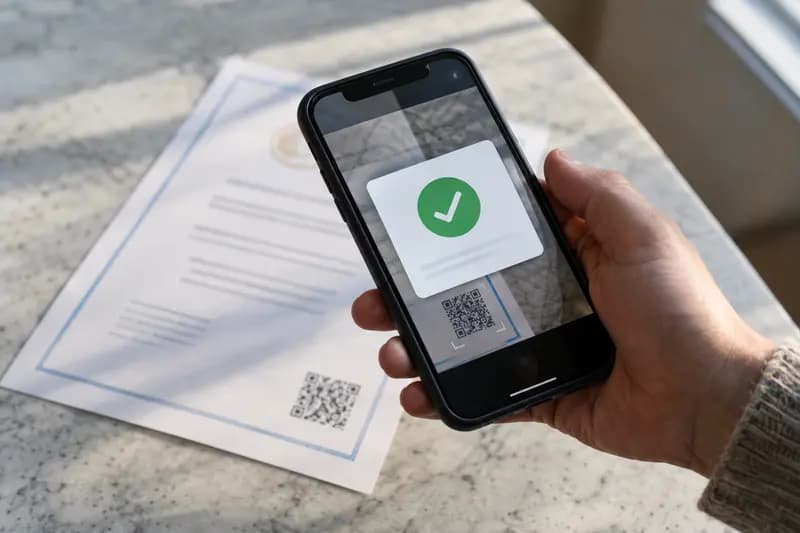 Affordable AI Certification With a Verifiable CertificateCheck whether an affordable AI certificate is genuinely verifiable, what evidence to request, and which costs can appear after enrollment.
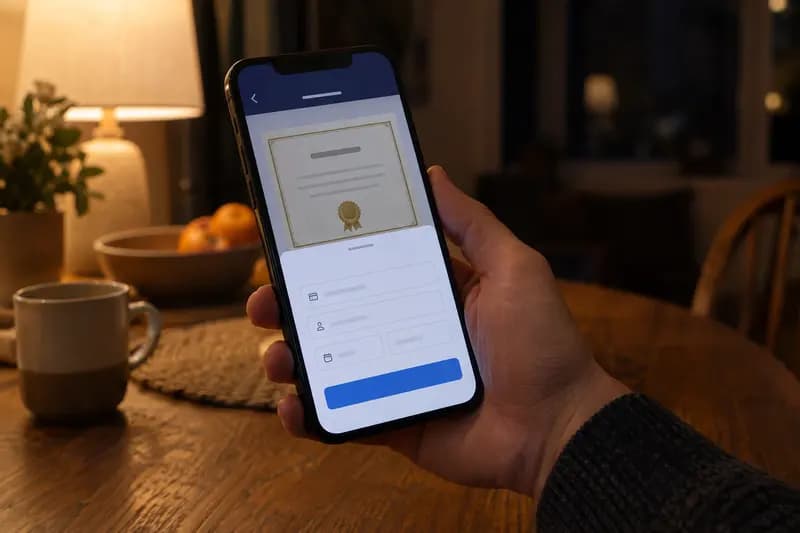 Free ChatGPT Course With a Certificate: What to CheckMost free ChatGPT certificates charge at the certificate step. Check who issues it, whether it is assessed and what an employer can verify first.
 AI Certification Under $100: What’s Worth Buying?Find an AI certification under $100 that proves useful work, avoid completion-certificate traps, and choose a credential for your actual job.
Tools in this piece
Drafted with AI assistance from our own research and Search Console data, and reviewed by the Automate Basics team before publishing. Tools and prices change; check the linked official source before you act.
Get the next one by email
One email a week: what changed in AI for people who use it at work, and what to do about it.