
Thoughtful Things launches AI sound sampler Engram on Kickstarter
By Automate Basics, written with AI from The Verge's original
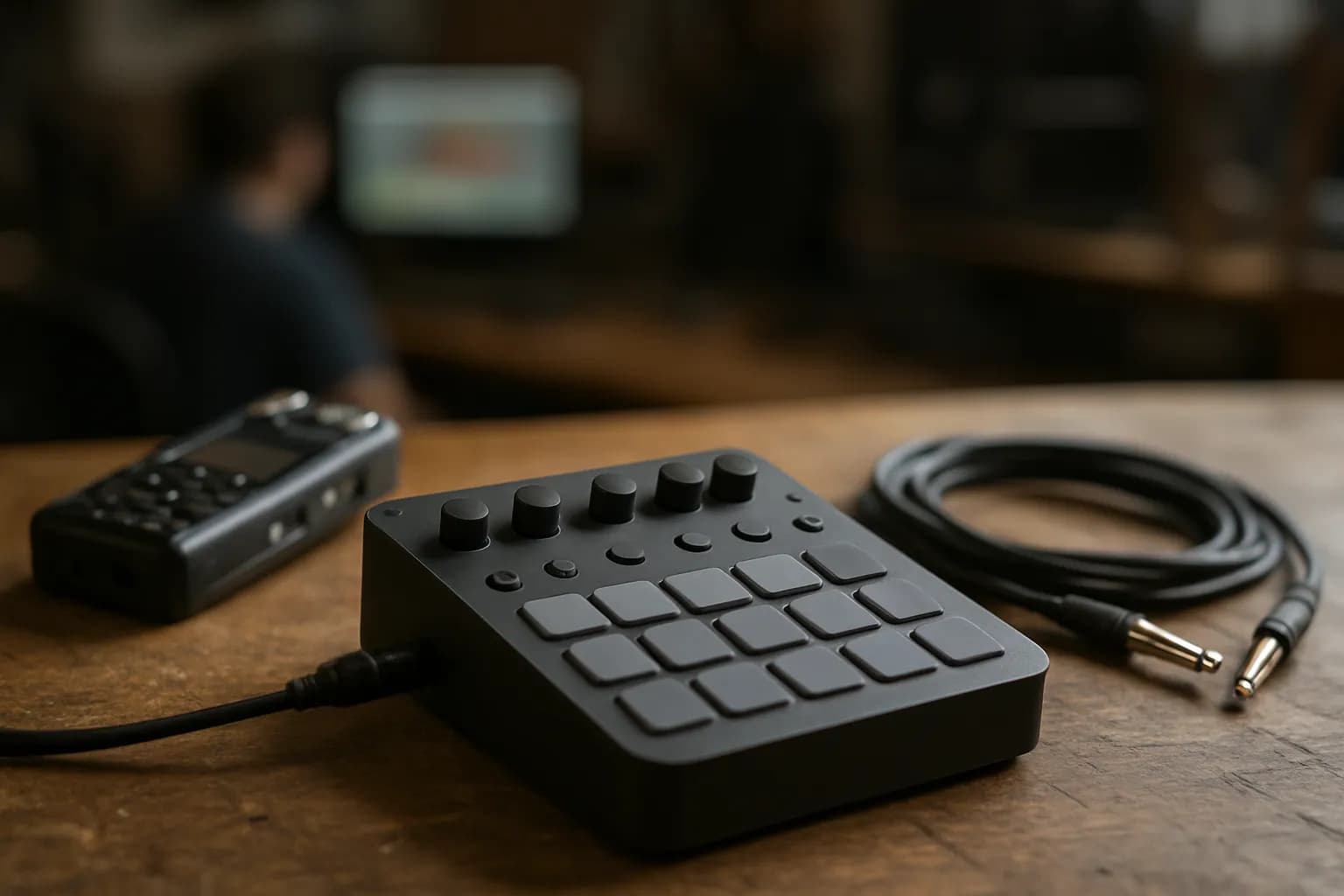
Thoughtful Things has launched a Kickstarter campaign for Engram, a sampler that uses AI to alter recorded audio and generate unusual sounds. It is aimed at musicians and sound designers experimenting with audio, not people seeking finished songs.
What changed
Thoughtful Things has launched a Kickstarter campaign for Engram, its first music instrument. The Verge reports that the sampler and groovebox uses AI to reshape incoming audio and generate new sounds. Its purpose is experimental sound design rather than making a finished song from a prompt.
Engram runs a small AI model on the device without an internet connection. In the campaign video, founder Evan King speaks a request for a piano sound and the instrument produces an irregular, piano-like result. Thoughtful Things says its models were trained on audio datasets licensed for commercial use. The company also plans to make the instrument's firmware available for others to modify or use with their own models.
Who can use Engram, and what does it cost?
Engram is relevant to musicians and sound designers who need unusual sounds for creative work. Its appeal is the ability to experiment with audio, including results that do not closely resemble the sound requested. Someone who needs a complete, polished track from a short instruction would be looking for a different kind of tool.
Thoughtful Things is offering a limited campaign run starting at $675, according to The Verge. That is a Kickstarter pledge price, not a stated retail price. The company has not announced what Engram will cost at retail. The source also does not give a delivery date, so anyone considering a pledge should not assume when the instrument will be ready for a project.
How do I try Engram for work?
Engram would be worth trying first on a task where an unexpected sound is useful, such as finding a distinctive texture for a music cue or another piece of produced audio. The campaign demonstration shows a spoken sound request producing a loose interpretation, so judge the result by whether it fits the work rather than whether it faithfully reproduces the requested instrument.
If you use generated audio in paid work, check whether each result suits your brief and whether you can use it under the terms that apply to your project. Thoughtful Things says its training datasets contain audio licensed for commercial use, but the source does not spell out terms for a user's finished recordings. Engram is at the campaign stage, so this is a potential workflow to assess, not a tested recommendation.
Frequently asked questions
Does Engram make complete songs?
Engram is presented as a sampler and groovebox for experimental sounds, not a device that turns a prompt into a finished song. The Verge describes it altering incoming audio and generating new sounds. Its campaign video shows a spoken request producing an unusual, piano-like sound.
Does Engram need an internet connection?
Engram does not connect to the internet, according to The Verge. It runs a small AI model locally on the instrument. Thoughtful Things also plans to open its firmware so others can modify it or load custom models, though the source gives no timetable for that plan.
How much does Engram cost?
Thoughtful Things is offering a limited Kickstarter run of Engram starting at $675, The Verge reports. The company has not announced a retail price. The source also does not specify a delivery date, so the campaign price should not be treated as the price or availability of a finished retail product.
Related reading
 Google tests Flipkart checkout inside Gemini and AI Mode in IndiaGoogle is testing purchases from select Flipkart listings inside Gemini and AI Mode in India, TechCrunch reports. The limited test may interest teams that use AI to research work purchases, but most users cannot try it yet.
 Meta outlines Mac computer use and connectors for Muse AI appMeta announced plans to add Mac computer use, connectors and a dedicated email address to its Muse AI app, according to TechCrunch. The features could make the personal agent more useful for work, but Meta has not said when they will arrive.
 Meta's Muse now offers a browser and download for its cloud filesMeta's Muse now offers users a file browser and a downloadable archive of the files in its cloud computer, according to The Verge. The change gives people using Muse for work a more direct way to inspect that environment.
Written with AI from The Verge's original and published after automatic checks: every figure here appears in the original, and no sentence is copied from it. The picture is AI-generated. The original is the authority.
Source: Engram is a sampler that turns broken AI hallucinations into music, The Verge, 27 Sept 2026.