
Amazon introduces Bee devices that turn conversations into notes
By Automate Basics, written with AI from TechCrunch's original
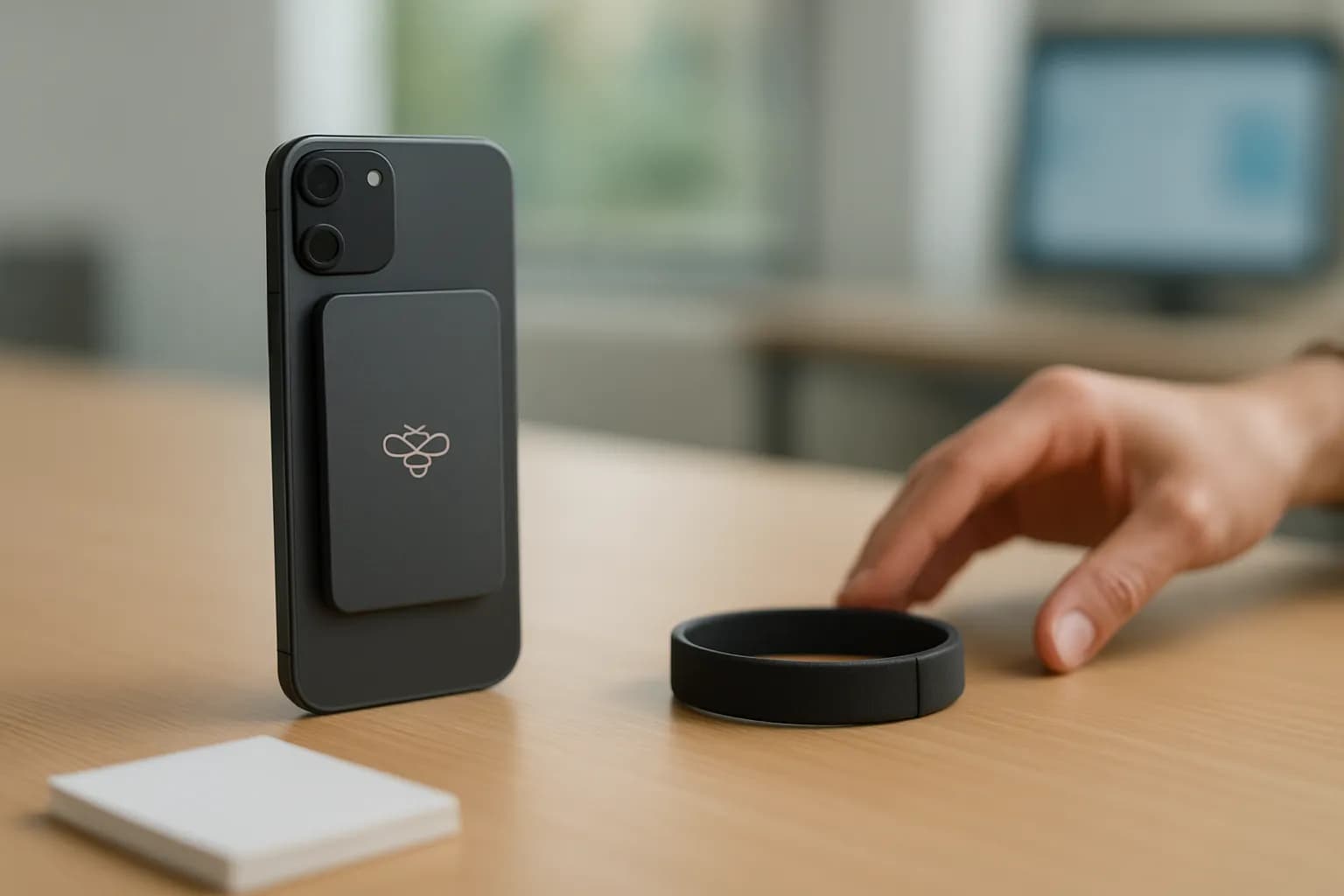
Amazon has introduced Bee devices that process conversations into notes, reminders and tasks. For people considering them at work, the useful question is whether hands-free capture outweighs the privacy considerations of recording colleagues.
What changed
TechCrunch reports that Amazon has introduced new Bee devices designed to turn audio from a person's day into notes, tasks and reminders. One can be worn on the wrist or as a pendant. Another is a slim device that attaches magnetically to the back of a smartphone.
According to TechCrunch, the devices process audio as they capture it, then delete the raw recording. Conversation transcripts are encrypted with keys controlled by the user's device. Amazon devices chief Panos Panay described the launch as part of a broader shift toward AI that works in the background, rather than waiting for someone to open an app and give a command. That broader shift is his expectation, not an announced change to how workplace apps operate.
Who can use Amazon's Bee devices?
TechCrunch's report does not say when the new Bee devices will be available, where they will be sold, what they cost or whether any plan is required. It also does not describe workplace accounts or controls for organisations. People considering Bee for work therefore cannot use this report to determine whether it fits their purchasing or data policies.
The devices could be relevant to someone who needs to recall tasks from conversations without stopping to take notes. But that possible use also raises a practical question: whether everyone involved has agreed to audio being processed. TechCrunch reports that Bee deletes raw audio after processing and restricts access to encrypted transcripts unless the user shares them. Those protections do not replace a workplace's own rules about recording conversations.
How do I try Bee for work notes?
A sensible first work test, once Bee is available, would be a low-stakes conversation in which everyone knows how the device works and agrees to its use. The point would be to see whether the resulting notes identify the right tasks and reminders, not to assume that an automatically produced record is complete. Compare the output with what participants remember, and correct any missed or misassigned tasks before relying on it.
TechCrunch does not provide instructions for operating the devices, so there is no confirmed setup process to follow from this report. Before using Bee around clients, colleagues or confidential information, check your organisation's rules. The reported deletion of raw audio is useful context, but the device still produces transcripts that may contain sensitive details.
Frequently asked questions
Does Bee keep recordings of conversations?
According to TechCrunch, Bee processes audio as it captures it and deletes the raw audio afterward. It creates conversation transcripts, which are encrypted using keys controlled by the user's device. The report says others, including Amazon employees, cannot access those files unless the user deliberately shares them.
Can I buy Bee for my team now?
TechCrunch reports that Amazon introduced the new Bee devices, but the report does not give a price, sale date, supported locations or workplace plan details. It is therefore not enough to establish whether a team can purchase or manage the devices for work.
Related reading
 Bluesky expands Attie to make shareable games, polls and appsBluesky's Attie AI tool can now make small social apps from prompts, including polls, games and dashboards, according to The Verge. People can share the results as separate websites.
 Meta releases Muse Spark Open for local Mac workflowsMeta has released Muse Spark Open, an open-weight AI model designed to run on Macs and handle coding and other desktop tasks. TechCrunch reports that running it locally requires unusually large amounts of memory.
 Google brings Gmail AI Inbox to paid Workspace usersGoogle is expanding Gmail’s AI Inbox to paid Workspace users. It pulls suggested to-dos from email conversations and summarizes important topics, though access is limited to US users with EN-US as their language.
Written with AI from TechCrunch's original and published after automatic checks: every figure here appears in the original, and no sentence is copied from it. The picture is AI-generated. The original is the authority.
Source: Amazon devices chief Panos Panay sees a future where AI devices replace the need to use apps, TechCrunch, 15 Oct 2026.