
Industrial Next says its AI robot stations can switch factory tasks faster
By Automate Basics, written with AI from TechCrunch's original
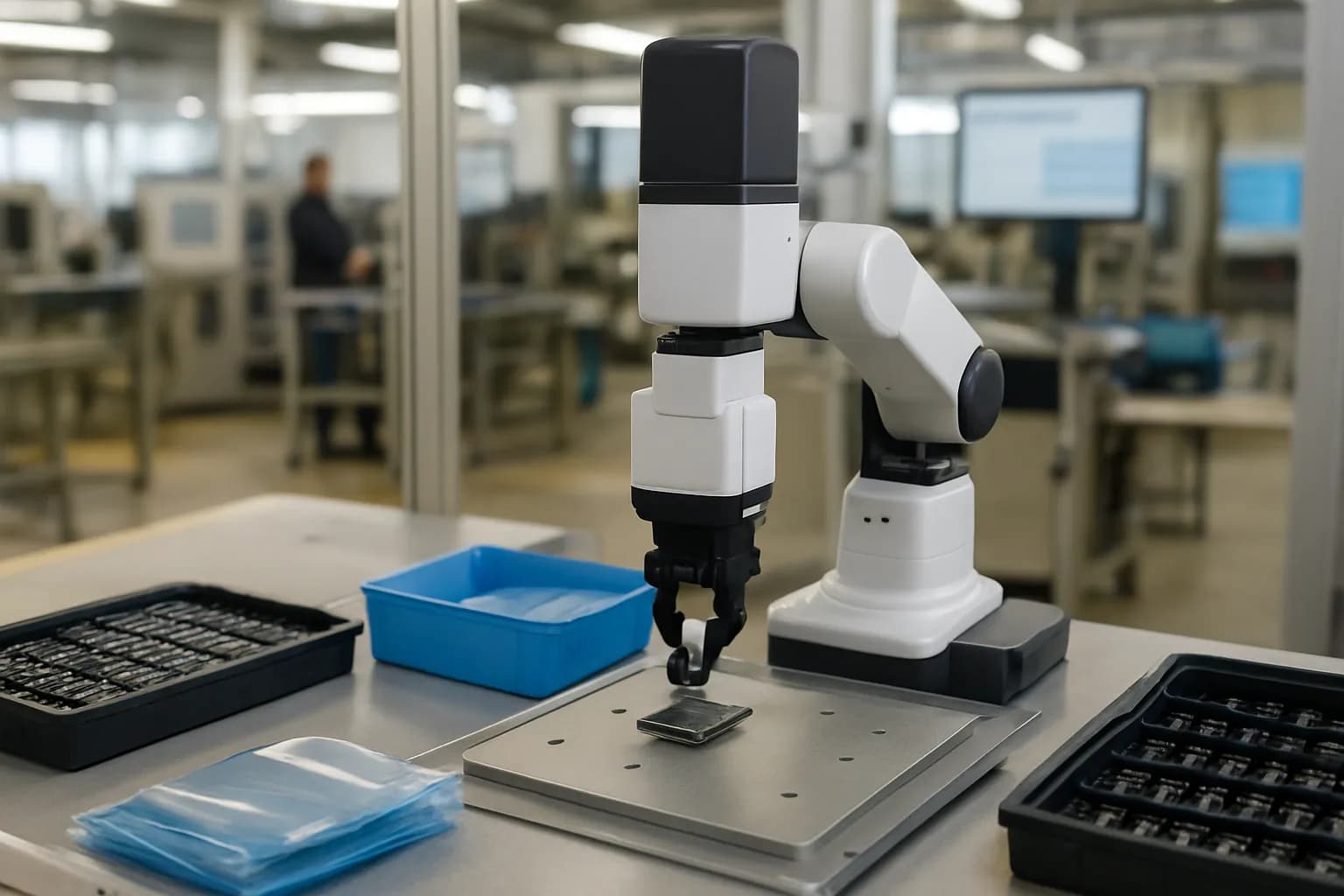
Industrial Next says its AI-powered robotic stations can take on new manufacturing tasks through simulation and demonstration instead of traditional programming. The stations are aimed at factories handling delicate assembly work.
What changed
Industrial Next says its self-contained robotic stations can be adapted for new production tasks in minutes rather than the weeks traditional line changes can take. According to TechCrunch, the stations use AI models that connect what a robot sees with the task it needs to perform and how it moves. Workers teach new tasks through simulation and demonstration rather than writing fixed instructions for each movement.
Industrial Next says the stations can be reconfigured and moved between product lines. TechCrunch reports that some are already used in smartphone manufacturing, where they handle delicate assembly work. The reported speed of switching tasks is the company's claim, not a guarantee that every factory change will take minutes.
Who can use Industrial Next's robot stations?
Industrial Next's stations are intended for manufacturers with complex or delicate tasks that are difficult to automate using fixed equipment. The company described work involving small phone components, including placing a delicate cable and removing protective film. Those examples point to a potential fit for teams whose products or assembly processes change often.
TechCrunch reports that stations are in use at an unnamed smartphone manufacturer. Industrial Next has also announced an evaluation with BMW Group Technology Office, but the report does not say that the stations are available for general purchase. It gives no price, purchasing terms or plan details. A factory team would need to ask the company about access and cost rather than assume it can install a station now.
How do I try this approach at work?
A manufacturing team considering Industrial Next's approach could start with a delicate, repeatable task that currently needs a person or frequent robot reprogramming. Document how the task is done today, then ask whether the company can assess that specific job. TechCrunch does not describe a self-service way to try the stations or a standard trial process.
If an evaluation is possible, check whether the station handles the parts consistently and whether it still works when a component or product line changes. Compare the time needed to teach and validate the new task with the time your existing process takes. Industrial Next says simulation helps prepare its robots, but performance on a reported smartphone task does not establish how they will perform on a different factory's parts.
Frequently asked questions
What does Industrial Next's AI change about factory robots?
Industrial Next says its robotic stations can learn new assembly tasks through simulation and demonstration instead of relying on fixed instructions for every movement. The company says stations can be reconfigured for different product lines, which could reduce the work required when production changes.
Can my company buy an Industrial Next robot station?
TechCrunch reports that Industrial Next stations are already used in smartphone manufacturing and that BMW Group Technology Office is evaluating the technology. The report does not give a general release date, a price or purchasing terms, so interested manufacturers would need to ask the company directly.
Related reading
 Shopify will let shoppers connect more AI agents to its catalogShopify plans to let shoppers connect an AI agent to their Shop account without a separate partnership integration. The agent can search Shopify’s catalog and help make purchases, but the buyer must approve each order.
 Notion adds database column permissions for people and AI agentsNotion has added database column permissions that let owners control which properties each person or AI agent can view or edit. The change is aimed at teams that keep shared work and restricted information in the same database.
 Higgsfield extends AI video length beyond ten minutesOpenAI says Higgsfield can now produce AI videos longer than ten minutes, up from one minute. Its summary also connects the update to more precise visuals and a possible path to filmmaking by voice.
Written with AI from TechCrunch's original and published after automatic checks: every figure here appears in the original, and no sentence is copied from it. The picture is AI-generated. The original is the authority.
Source: Industrial Next wants factory robots to switch tasks in minutes, not weeks, TechCrunch, 13 Oct 2026.